
Technique, Teaching and the Trouble with Anecdotal Evidence
Why distinguishing what an exercise is from how we teach it matters, particularly when we're educating other teachers.
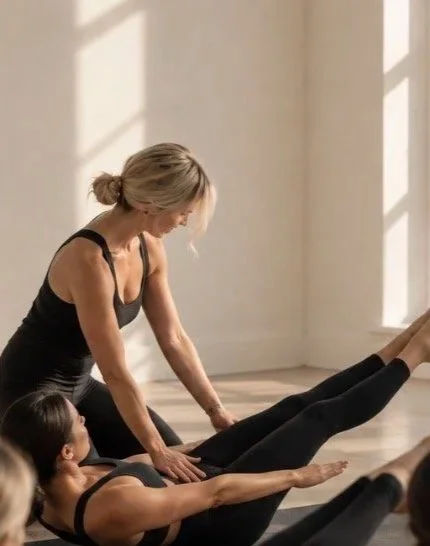
One of the wonderful things about studying Pilates with different teachers is discovering just how differently the same exercise can be taught.
One teacher might use a particular image that immediately makes sense to you.
Another might offer a correction that changes your understanding of an exercise you've practised for years.
Someone else might approach the same movement from an entirely different direction.
These are often the experiences that make us better teachers.
But they also raise an important question: how much of what we teach as technique is actually technique, and how much is the particular brilliance of the teachers we've studied with?
What is technique?
In Classical Pilates, technique describes the exercise itself.
Its starting position, movement sequence, mechanics, defining characteristics and, where applicable, its breathing pattern, repetitions and transitions.
These are the elements that allow us to identify an exercise, understand how it is performed and distinguish it from another.
Technique gives us a common reference point.
It doesn't necessarily tell us how to teach the exercise, what language to use, which correction to offer or how to help a particular student understand it.
That's teaching.
And while the two are closely related, they aren't interchangeable.
What technique is not
Technique is not every instruction you've ever received from a teacher.
It's not necessarily the image that helped you understand a movement, the correction that worked particularly well for your body or the order in which your teacher chose to introduce certain concepts.
Nor is it every observation you've made over the course of your teaching career.
These things can be enormously valuable. They form part of our professional knowledge and contribute to the development of our individual teaching methodologies.
But their usefulness doesn't automatically make them technical requirements.
Consider two teachers working with the same exercise.
One might emphasise spinal articulation. Another might focus on the relationship between the pelvis and the legs. A third might say very little and allow the student to discover the movement through repetition.
They may all be teaching the same technique, provided the defining characteristics of the exercise remain intact.
Their approaches are different. The exercise need not be.
And recognising that distinction allows us to appreciate the skill of individual teachers without turning every successful teaching strategy into a rule.
The problem with anecdotal evidence
Pilates is a practical discipline. Much of what we know as teachers develops through observation, experimentation and years of working with students.
We notice patterns. We try different approaches. We discover that certain instructions seem to produce more consistent results than others.
This is an important part of developing professional judgement.
But we need to be careful about the conclusions we draw from those experiences.
If a particular cue consistently helps your students perform an exercise, that's useful information.
It doesn't necessarily establish why the cue works, whether it will work for everyone or whether it's the only appropriate way to teach the movement.
Similarly, if you've taught something successfully for 30 years, that experience deserves consideration. But longevity alone doesn't establish technical correctness or prove the explanation behind your results.
Observation is not the same as explanation, and correlation is not the same as causation.
Anecdotal evidence can generate useful questions. It can inform our teaching decisions and provide examples worth examining.
What it cannot do, on its own, is establish universal principles.
And that matters particularly when we move from teaching students to educating other teachers.
When teaching becomes education
There's a difference between sharing a successful teaching approach and presenting that approach as an established technical fact.
Both might happen in a workshop, and both can be valuable.
The responsibility of the educator is to make the distinction clear.
For example:
“I've found that this approach works particularly well with my students.”
That's a perfectly reasonable statement. It identifies a practical observation and places it in context.
But:
“You must teach it this way because this is how the exercise works.”
That's a different claim entirely.
It suggests a technical necessity and that should be supported by something more substantial than personal preference or experience.
This doesn't mean every workshop needs to become an academic lecture, or that experienced teachers must produce scientific research to justify every correction.
It means we should be precise about the authority we're claiming.
Are we demonstrating an established technical convention? Sharing an interpretation? Describing something we've observed? Or making a claim about anatomy, biomechanics or physiological outcomes?
Those are different kinds of knowledge, and they require different kinds of justification.
What about lineage?
Classical Pilates has another layer of complexity because so much of the work has been transmitted through teachers rather than through a single, comprehensive technical record.
Different teachers inherited different details, developed their own methods of communicating the work and placed emphasis on different aspects of the exercises.
That history is worth preserving.
But we should be cautious about assuming that everything passed down through a lineage constitutes an essential technical requirement.
Some differences concern the actual execution of an exercise. Others concern how the exercise was taught, explained or adapted to a particular student.
Those distinctions deserve investigation rather than automatic acceptance or dismissal.
And importantly, a technical reference doesn't have to pretend that every variation can be resolved into one definitive answer.
It can document established variations, identify common features and distinguish what is known from what remains open to interpretation.
That is far more useful than presenting one teacher's preferences as the only legitimate version of the work.
Why technical references matter
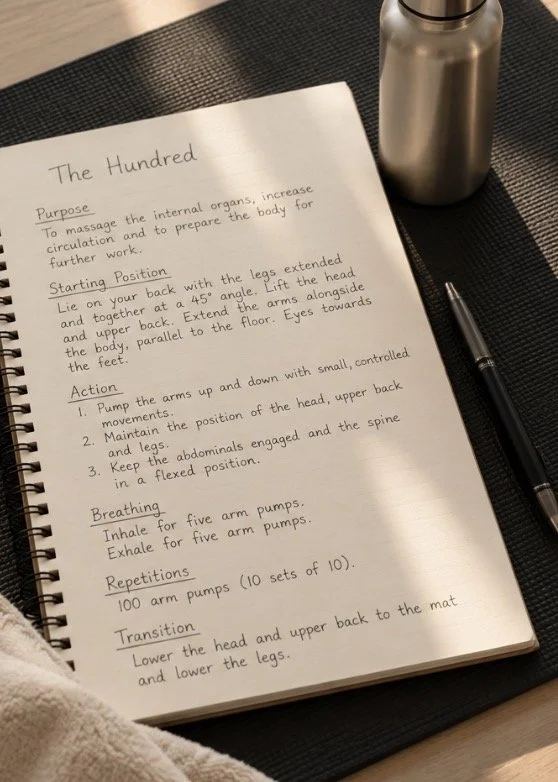
This is one of the reasons I've been working on The Classical Pilates Library.
The aim isn't to tell teachers how to teach.
It's to establish a clear technical record of the exercises as they're practised within Classical Pilates, without building one teacher's particular methodology into every description.
That distinction becomes increasingly valuable as teachers study with different educators, encounter conflicting instructions and develop their own approaches.
If we can identify what belongs to the exercise and what belongs to the teacher, we can have much more productive conversations about both.
We can compare technical variations without assuming that every difference represents an error.
We can appreciate a teacher's exceptional ability to communicate movement without insisting that their particular language is compulsory.
And we can examine the claims made in educational workshops with a little more professional discernment.
Better questions make better teachers
None of this diminishes the value of experience.
Quite the opposite.
The best teachers I've studied with have contributed far more than a collection of instructions. They've developed ways of seeing, understanding and communicating the work that are uniquely their own.
Those contributions deserve recognition.
But we don't honour excellent teachers by turning everything they say into an unquestionable rule.
We honour them by understanding what they've contributed, examining it thoughtfully and continuing to develop our own professional judgement.
When attending a workshop, perhaps we should be asking a few more questions.
Is this a technical requirement or a teaching preference? Is this a documented convention or a personal interpretation? Is the explanation supported by evidence, or is it based on observation?
And perhaps most importantly, does understanding this distinction make us better equipped to teach the student in front of us?
Your experience is worth sharing. Your interpretation of it is worth questioning.
That isn't a criticism of expertise. It's how expertise continues to develop.