
Career Progression in Pilates: What Does It Actually Look Like?
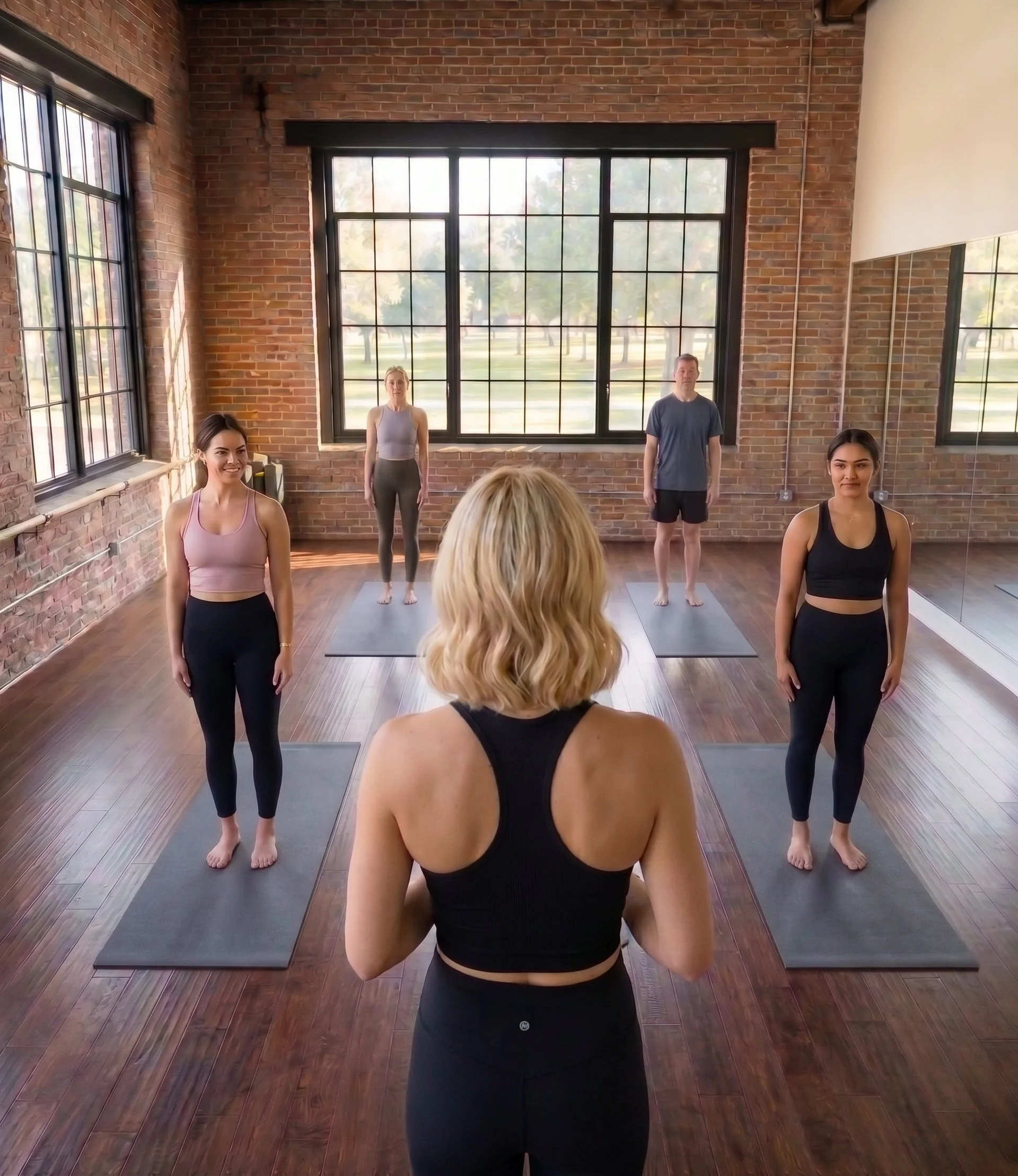
There is something rather peculiar about career progression in Pilates. You qualify as a teacher, start teaching, gain experience and continue teaching. Ten or twenty years later, you may still be doing precisely the same job, with the same qualification and the same professional title.
Does that mean your career hasn't progressed? Of course not. But it does raise an interesting question about what career progression actually looks like in a profession where becoming more experienced doesn't necessarily lead to a different job.
And perhaps more importantly, whether the things we commonly associate with progression are actually what we want from our careers.
Experience is not the same as progression
Time spent teaching is valuable, but the passage of time alone doesn't necessarily make someone a more accomplished teacher. Two teachers may each have ten years of experience, but those ten years might look very different.
One may have spent that time teaching a wide range of students, developing their own practice, observing experienced colleagues and refining their understanding of the work. Another may have spent those same ten years repeating a relatively narrow range of lessons without much change to their own practice or approach.
Both have ten years of teaching experience, but their professional development may be quite different.
Experience provides the opportunity for progression, but what we do with that experience is what matters. It is the accumulated knowledge, understanding and judgement that develops through teaching, practising and continuing to engage with the work that makes us better teachers.
Becoming a better teacher is a career ambition in its own right.
Becoming a better teacher is a career in itself
There seems to be an assumption that once you've been teaching for a while, the natural next step is to do something else. Open a studio, develop a teacher training programme, become a mentor or start presenting workshops.
These are all perfectly legitimate career choices, but why do we so often treat them as evidence that someone has progressed beyond teaching?
Teaching Pilates is a skill that can take decades to develop. There is an enormous difference between knowing an exercise, knowing how to teach an exercise and knowing when, why and to whom that exercise should be taught.
An experienced teacher develops the ability to observe a student, understand what they're seeing and make an appropriate decision without needing to interrupt every movement. They learn when to intervene and when to leave something alone, and how to teach a student towards greater independence rather than making them increasingly reliant on instruction.
These skills develop through experience, personal practice, observation and reflection. They are not necessarily accompanied by another qualification or a new job title, and they are certainly not less valuable because they happen within the same fifty-minute lesson you've been teaching for years.
Becoming exceptionally good at teaching is a perfectly legitimate career ambition. You don't have to stop being a teacher to demonstrate that you've progressed as one.
Does another qualification represent progression?
The Pilates industry offers an extraordinary number of opportunities for continuing education, from workshops and specialist certifications to additional apparatus training, advanced programmes and qualifications in different methods.
Some of these provide genuinely valuable opportunities to develop knowledge and skills, but I think we need to be careful about treating the accumulation of qualifications as a measure of professional progression.
A comprehensive teacher training programme should provide a teacher with the foundation necessary to begin a career teaching the method. It should not require an endless succession of additional qualifications simply to become competent in the work it was supposed to prepare them to teach.
There is, of course, a difference between expanding your professional scope and deepening your understanding of what you already know. A teacher who chooses to study a different discipline or develop expertise in a particular area may reasonably need additional formal education.
But a teacher who wants to become more accomplished within their existing method may benefit far more from sustained personal practice, teaching experience and time spent working alongside someone with greater experience.
Sometimes progression means learning something new. Sometimes it means finally understanding something you've been teaching for fifteen years.
What about becoming a teacher trainer?
For some teachers, moving into teacher education is a natural extension of their work. They have developed substantial experience, a thorough understanding of the method and an interest in helping other teachers develop their own skills.
But being an accomplished teacher and being an accomplished teacher trainer are not quite the same thing. Teaching someone Pilates and teaching someone how to teach Pilates require different skills.
A teacher trainer needs to be able to explain not only what they do, but why they do it. They need to recognise the difference between a teacher who can reproduce an exercise and one who understands how to teach it, and have sufficient experience to recognise that their own way of teaching is not necessarily the only effective way.
Becoming a teacher trainer should represent an additional professional responsibility, rather than simply the next title available to someone who has completed a training programme.
It should also be a choice. Not every experienced teacher wants to train other teachers, and there is no reason why they should feel that they need to.
Some of us simply want to teach Pilates.
Opening a studio is a business decision, not a teaching promotion
Opening a studio is another step frequently associated with career progression, and having owned a studio myself, I understand the attraction. Having your own space offers independence, control over your working environment and the opportunity to build something that reflects your approach to teaching.
But studio ownership also introduces an entirely different set of responsibilities. Rent, staffing, maintenance, scheduling, marketing and financial management all require time and attention, often at the expense of the very thing that led you to open a studio in the first place.
Running a successful studio requires business skills, while being an excellent Pilates teacher requires teaching skills. They can certainly coexist, but one does not automatically establish the other.
A teacher who owns a studio has not necessarily progressed further professionally than a teacher who chooses to remain independent and rent space. They have chosen different ways of working, each with its own advantages, responsibilities and financial considerations.
Equally, as I’ve experienced myself, a teacher who decides to close a studio and return to teaching independently has not necessarily taken a step backwards. They may simply have realised that running a studio is no longer how they want to spend their time.
Sometimes career progression means understanding which parts of your work you actually enjoy and making decisions that allow you to spend more time doing them.
What about earning more money?
This is a part of career progression that I think we should be more comfortable discussing. Teaching Pilates is a profession, and for most of us, it is also how we earn our living.
As teachers gain experience, develop their skills and establish their professional reputations, it is reasonable to expect their earning potential to develop too. But increasing your income doesn't necessarily mean teaching more hours.
In fact, I would argue that one of the more useful measures of career progression is the ability to earn a good living without having to fill every available hour with lessons.
That might mean increasing your rates, building a reliable client base, reducing unnecessary business expenses or developing a working arrangement that allows you to retain more of what you earn. It might mean moving from employment to independent teaching, or negotiating better terms within an existing studio.
It might also mean recognising that a full diary isn't particularly impressive if the financial return doesn't justify the hours you're working.
There is nothing wrong with wanting to earn more money, just as there is nothing wrong with wanting to work less. In fact, the ability to do both might be exactly what career progression looks like for you.
More responsibility isn't always the answer
We tend to associate career advancement with taking on more. More responsibility, more students, more employees, more qualifications and more hours. But what if the objective is to have less?
For some teachers, taking on additional responsibilities through studio management, teacher education or business ownership is exactly what they want. They enjoy developing programmes, working with other teachers and building something beyond their own teaching practice.
For others, those responsibilities might take them further away from the part of their work they find most rewarding.
Perhaps your ambition is to teach fewer hours, but be better paid for them. Perhaps you want greater freedom to choose the students you work with, the studios you teach in and the hours you make available. Or perhaps you want more time for your own practice, your family or the things you enjoy outside of Pilates.
A career that allows you to do the work you enjoy without having to spend quite so much time doing everything else sounds like progression to me.
And it doesn't necessarily require a bigger business, another qualification or a different job title.
So what does career progression actually look like?
I don't think there is one answer, and I think it's worth asking yourself periodically what you actually want from your career, particularly once you've been teaching for several years.
Not what you think you should be doing next, or what other teachers appear to be achieving, but what you want your working life to look like in five, ten or twenty years.
Your answers may change over the course of your career. What you wanted when you first qualified might look quite different from what you want after ten or twenty years of teaching, and there is nothing wrong with making different choices as your circumstances and priorities change.
You might want your own studio. You might want to train teachers. You might want to teach ten hours a week, earn a good living and spend the rest of your time doing something else entirely.
Or you might simply want to become a much better teacher.
None of those ambitions requires you to chase the others. There is no reason to assume that the teacher with the biggest studio, the most qualifications or the fullest diary has necessarily progressed further than the teacher who has chosen a different path.
Ultimately, career progression should reflect the life you're trying to build, rather than simply the next opportunity that happens to present itself.
There is nothing particularly progressive about building a career that takes you further and further away from the work you actually enjoy.