
How low should your legs be in the Hundred?
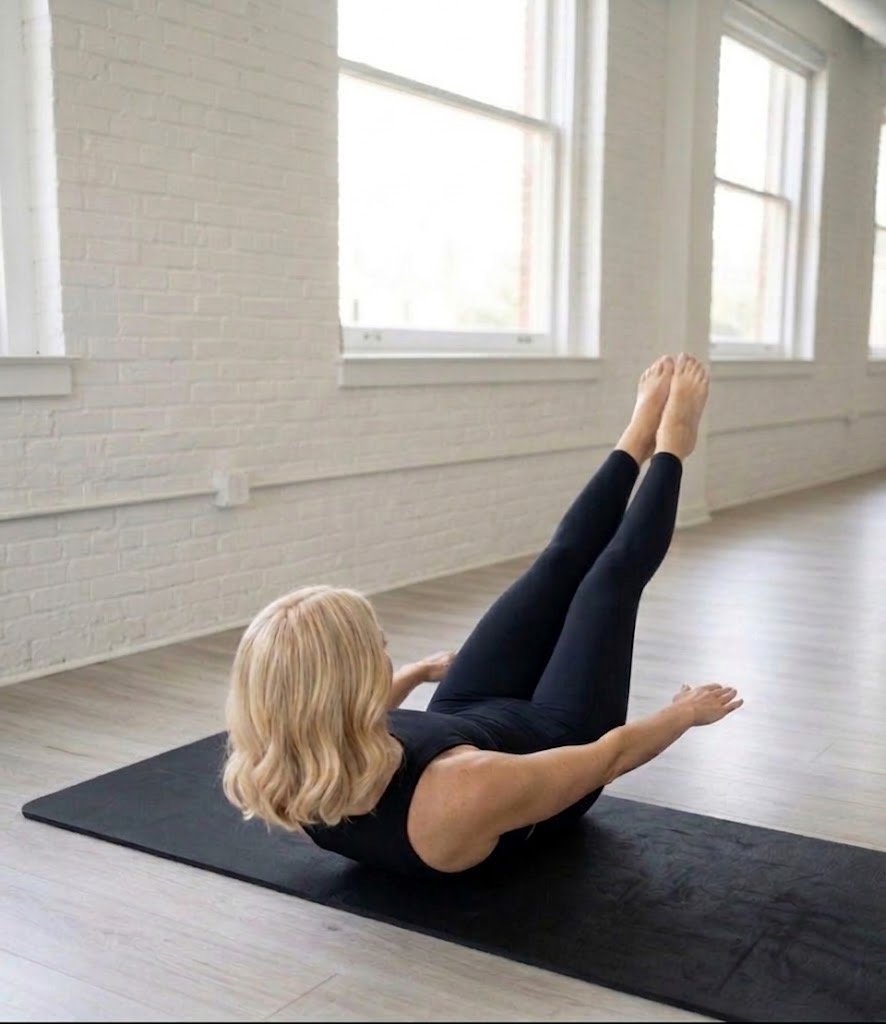
The Hundred is probably one of the most recognisable exercises in Classical Pilates.
It’s also one where a fairly simple question can have a surprisingly complicated answer:
How low should your legs be?
Joseph Pilates was actually quite specific. In Return to Life Through Contrology, published in 1945, he describes performing The Hundred with the feet approximately two inches above the mat.
If you’ve studied Classical Pilates, though, you may also have been taught to keep the heels around eye level. Or you may have been told to lower the legs only as far as you can control them.
So which is correct?
The Position Has a Purpose
For me, the more useful way to think about leg height is in relation to the powerhouse.
The legs are together and straight, with a slight turnout, and extend away from the body. Their height should allow you to maintain their connection back into the powerhouse.
That might mean the legs are relatively high. It might mean they are much lower.
The important thing isn’t achieving a particular angle. It’s whether the position of the legs supports the organisation of the whole exercise.
Lower isn’t necessarily better. Higher isn’t necessarily a modification.
What About Eye Level?
“Heels no lower than eye level” is a useful reference, particularly when you are learning the exercise.
But a reference and a technical rule aren't necessarily the same thing.
As you develop greater strength, control and understanding of the exercise, the position can change. The question becomes less Where are my legs supposed to be? and more Can I maintain the connection as my legs reach further away from me?
That distinction is important in Classical Pilates.
The Hundred Is More Than a Shape
The same principle applies to the arms.
Joseph Pilates gave specific measurements for the position and movement of the arms. In practice, however, the arm pumps aren't simply something happening at the shoulders.
The arms connect back into the powerhouse. Their vigorous pumping action both maintains and challenges that connection.
The breath is part of the exercise too. Five pumps inhaling and five pumps exhaling is the familiar starting rhythm, but the larger objective is full, continuous breathing coordinated with the movement.
As breathing capacity develops, the breath can become fuller and longer rather than being restricted simply to satisfy a count.
One of the things I find most interesting about studying Classical Pilates is that technical detail matters. Where the legs are, what the arms are doing, how the spine is organised and how the breath relates to the movement all matter. But technique isn't just a collection of prescribed positions. In The Hundred, the height of the legs makes sense in relation to the powerhouse. The arm action makes sense in relation to the trunk. The breath makes sense in relation to the rhythm. Understanding those relationships is ultimately much more useful than trying to reproduce a particular shape.